

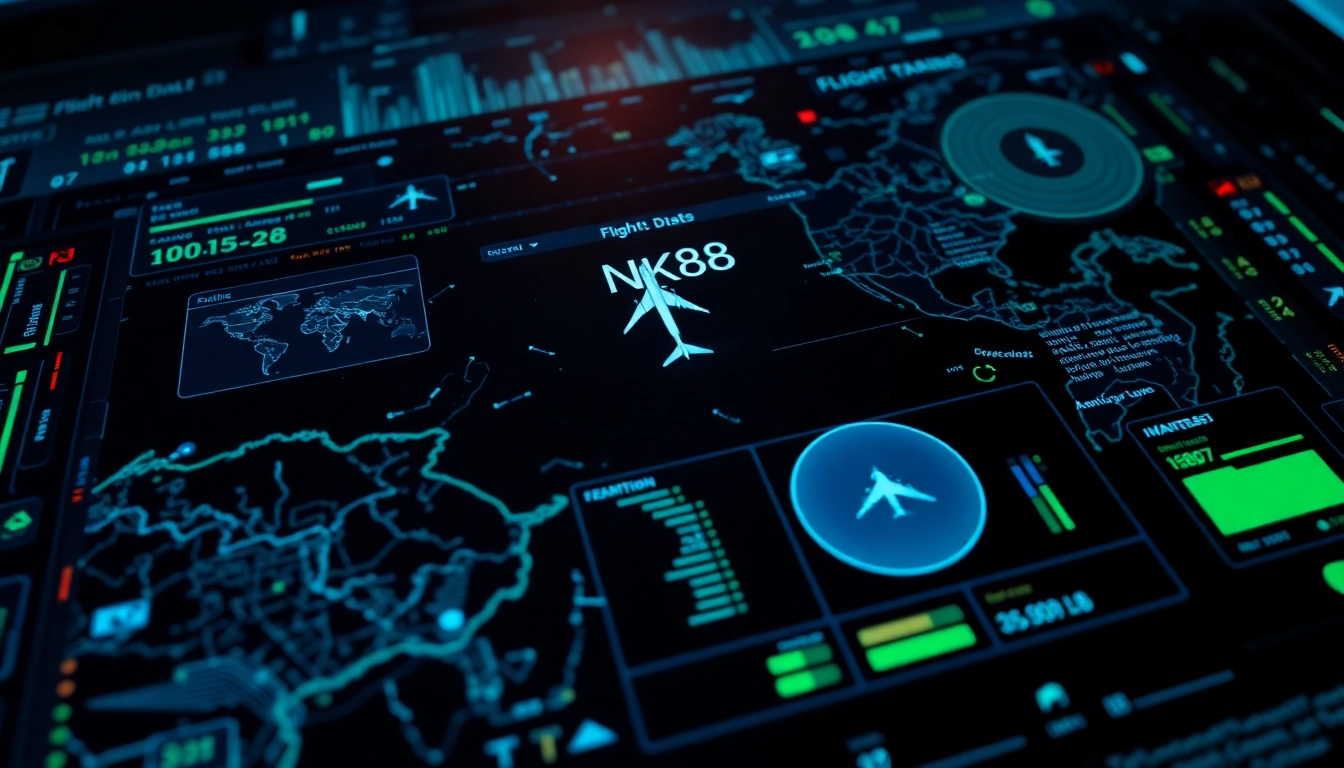
Understanding Flight Tracking Basics
Flight tracking has become an integral part of the modern aviation experience, allowing airlines, travelers, and aviation enthusiasts to monitor the status of flights in real-time. With technologies evolving at an unprecedented pace, understanding how flight tracking works, including systems like NK88, is crucial for maximizing efficiency and ensuring passenger satisfaction. This article will explore key aspects of flight tracking, including its importance, key terminologies, and the technology that enables real-time data sharing.
What is Flight Tracking and Why is it Important?
Flight tracking refers to the process of monitoring the progress of an aircraft throughout its journey, from departure to arrival. This system provides valuable information such as estimated times of arrival, delays, and the current location of the flight. For travelers, this means reduced anxiety regarding flight status, while for airlines, effective flight tracking can significantly improve operational efficiency.
Key Terminology: NK88 Explained
Understanding the specifics of terms related to flight tracking, such as NK88, is essential. NK88 often refers to flight designators within a particular airline’s code system, ensuring seamless communication and tracking. In this case, NK88 is the flight number for a Spirit Airlines flight, indicating a specific route and operational details.
The Technology Behind Modern Flight Tracking
Modern flight tracking leverages satellite technology, ADS-B (Automatic Dependent Surveillance–Broadcast), and radar systems. These technologies work in unison to provide accurate and timely data on flight positions, speeds, and altitudes. By integrating various data sources, airlines can improve their service quality and operational decision-making.
The Features of NK88 Flight Tracking
Real-Time Data: How Does NK88 Provide Accurate Information?
One of the most significant advantages of systems like NK88 is their ability to provide real-time data. Utilizing advanced software and satellite communications, NK88 allows passengers and airlines to receive timely updates on flight status. This real-time tracking helps airlines manage resources more effectively, improving overall operational efficiency.
User-Friendly Interfaces: Exploring the NK88 Experience
User experience plays a crucial role in how effectively passengers can utilize flight tracking services. The NK88 interface is designed with user accessibility in mind, featuring straightforward navigation and informative displays that make it easy to understand flight status at a glance. This user-centric approach enhances the overall experience for travelers.
Comparative Analysis: NK88 vs. Other Flight Tracking Systems
While many flight tracking systems exist, NK88 stands out due to its specific focus on certain routes and operational capabilities. By comparing NK88 with other platforms, users can identify the strengths and weaknesses of each system. Understanding these distinctions can empower travelers and airlines to choose the best tracking solution for their needs.
Benefits of Using NK88 for Travelers and Airlines
Enhancing Passenger Experience with NK88
Enhancing the passenger experience through effective flight tracking systems is paramount. NK88 offers travelers up-to-the-minute information that helps reduce uncertainty regarding flight statuses. With notifications and real-time updates, passengers can plan their travels more efficiently, improving their overall satisfaction.
Operational Efficiency for Airlines Using NK88
For airlines, employing NK88 can lead to improved operational efficiency. By accurately predicting flight delays and arrivals, airlines can optimize crew scheduling and ground services, minimizing idle time and maximizing resource utilization.
Reducing Delays: The Role of NK88 in Improved Scheduling
Delays can be a significant inconvenience for both airlines and travelers. With its real-time tracking capabilities, NK88 enables airlines to identify potential delays far in advance. This foresight allows for proactive measures to be implemented, such as rerouting or rescheduling, thus minimizing disruption and improving customer service.
Challenges and Limitations of Flight Tracking
Common Misconceptions About NK88 Flight Tracking
Despite its advantages, misconceptions about flight tracking systems like NK88 persist. One common myth is that flight tracking is always perfectly accurate. While NK88 offers high accuracy, it relies on external factors such as weather and technology that can occasionally result in discrepancies.
Technical Challenges in Flight Tracking Technology
Technical limitations can also hinder the effectiveness of flight tracking. Issues such as signal loss in remote areas or the dependency on various data sources can affect the reliability of the information provided. Continuous advancements in technology are necessary to address these challenges.
Addressing Privacy Concerns with NK88 Data
As flight tracking systems gather vast amounts of data, privacy concerns arise. With NK88, it is crucial to implement robust data protection measures that safeguard passenger information while still providing valuable tracking services. Balancing transparency and privacy is a challenge that the industry continues to navigate.
The Future of Flight Tracking and NK88 Innovations
Emerging Trends in Aviation Technology for 2025
Looking ahead, the aviation industry is poised for significant advancements in tracking technology. Innovations such as AI-driven predictive analytics and blockchain for securing data integrity are expected to revolutionize the way systems like NK88 operate, providing even more reliable and insightful tracking capabilities.
Predictions: The Evolution of NK88 Flight Services
As technology advances, NK88 is likely to evolve to incorporate more personalized services for travelers. Expect features like enhanced predictive modeling that can anticipate delays based on historical data and current conditions, allowing for more informed travel decisions.
How NK88 is Shaping the Future of Air Travel
Ultimately, systems like NK88 are shaping the future of air travel by enhancing the traveler experience and operational efficiency for airlines. As these technologies continue to develop, they will play a pivotal role in ensuring safer, more reliable, and enjoyable journeys for passengers around the world.
